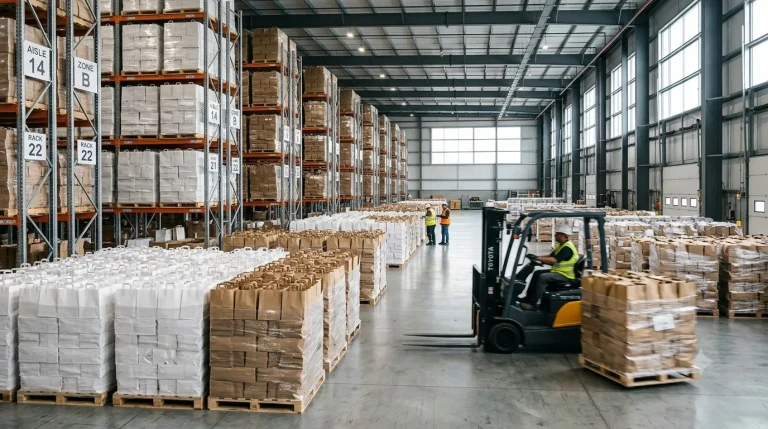
Beyond the Unit Price: The True Cost of Sustainability in Bulk
When you’re a global brand, your reputation hinges on consistency. This isn’t just about your product; it extends to every touchpoint, including the humble paper bag your customer carries out of your store, or receives at their doorstep. The market is saturated with suppliers touting “eco-friendly” options, but a savvy buyer knows that the term is often stretched thin. The true cost of sustainability isn’t just the price per bag, it’s the investment in materials, processes, and supply chain transparency that genuinely uphold your brand’s green commitments. Anything less risks accusations of greenwashing, which, let’s be honest, is far more damaging than paying a few cents extra per unit.
Is “eco-friendly” just marketing fluff, or is there a real difference?
This is where due diligence becomes non-negotiable. Many suppliers will claim their bags are 100% recyclable, which is a good start, but it’s often the bare minimum. We dig deeper. Is the paper made from virgin fibers or recycled content? If it’s recycled, what’s the post-consumer content percentage? Crucially, is it FSC-certified, ensuring responsible forest management? Are the inks water-based and biodegradable? Even the adhesive matters. It’s not just about what the bag is made of, but how it’s made. A truly sustainable bag has a transparent lifecycle, from raw material sourcing to end-of-life disposal. Without those verifiable details, you’re buying a story, not a solution.
How do global logistics impact my carbon footprint and budget?
The journey from manufacturer to your distribution centers, and eventually to your customers, carries a significant environmental and financial weight. Sourcing from a factory on the other side of the world might offer a compelling unit price, but have you factored in the carbon emissions from ocean freight, port handling, and inland transportation? What about the lead times, potential delays, and the cost of holding larger inventories to mitigate those risks? These are real-world considerations that impact your overall operational efficiency and your declared Scope 3 emissions. Sometimes, a slightly higher unit cost from a regional supplier, especially one with optimized logistics networks, can result in a lower total cost and a far smaller environmental footprint. It’s a complex equation, and one we help unravel for our partners.
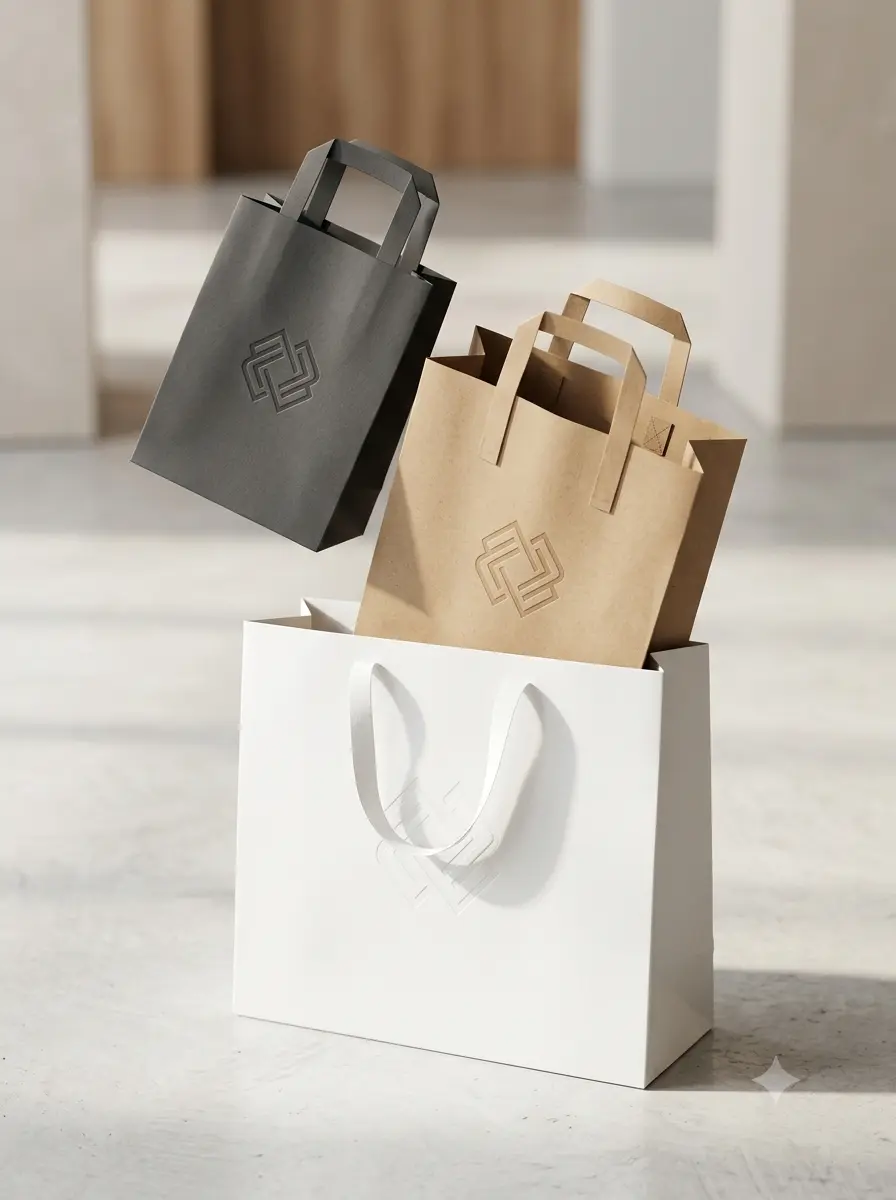
Sourcing with Confidence: What to Demand When you buy flat handle paper bags bulk
Buying in bulk isn’t just about getting a good deal. It’s about securing a reliable, consistent supply that upholds your brand’s standards across every market you operate in. Many brands get burned by suppliers who promise the moon on samples, only to deliver a subpar product in the actual bulk order. This is particularly true when you’re dealing with international suppliers and different regulatory environments. You need a robust vetting process that goes beyond a quick quote. It’s about building a partnership, not just placing an order.
Can I really get consistent quality and branding across multiple regions?
This is a major pain point for global brands. A bag in Tokyo needs to feel and look identical to a bag in New York or Paris. The paper stock, the print quality, the handle adhesion, even the fold lines, all must be consistent. This requires rigorous quality control protocols at the manufacturing source. We insist on pre-production samples, multiple rounds of approval, and third-party inspection reports during production. Don’t shy away from asking for factory audits or even sending your own team. A reputable supplier will welcome the scrutiny. We’ve found that a strong, documented quality management system, often ISO 9001 certified, is non-negotiable. Without it, you’re rolling the dice on every shipment.
What are the risks of high Minimum Order Quantities (MOQs) and long lead times?
High MOQs can be a double-edged sword. On one hand, they typically unlock better unit pricing. On the other, they tie up capital, demand significant warehouse space, and can leave you with obsolete stock if your branding or product lines change unexpectedly. Similarly, long lead times, often 12-16 weeks for overseas bulk orders, require precise forecasting. Under-forecast, and you face stockouts. Over-forecast, and you’re stuck with excess inventory. The key here is finding a supplier who understands your business cycles and can offer some flexibility. This might mean negotiating staggered deliveries or exploring suppliers with regional manufacturing hubs. It’s a balancing act between cost efficiency and operational agility.
The PapMaker Difference: Crafting a Resilient Eco-Packaging Supply Chain
At PapMaker, we’ve spent years navigating these very waters. We understand that global brands need more than just a vendor; they need a strategic partner who can anticipate challenges and deliver solutions that align with their core values. When you’re looking to buy flat handle paper bags bulk, our focus shifts from simply fulfilling an order to optimizing your entire packaging ecosystem. We’ve built our reputation on transparency, reliability, and an unwavering commitment to sustainable practices that go beyond certifications to actual impact. This means we don’t just supply bags; we supply peace of mind.
How do I audit my supply chain for true ethical and environmental compliance?
It’s not enough for your supplier to claim compliance; you need proof. We advocate for a multi-layered approach. First, insist on third-party certifications like FSC for paper sourcing, and SA8000 or SEDEX for social and ethical compliance in manufacturing. These aren’t just badges; they represent ongoing audits and adherence to international standards. Second, ask for full traceability documentation. Where does the pulp come from? Who processes it? Where are the bags manufactured? We provide this level of detail because we believe in complete transparency. For global brands, this also means understanding local regulations, such as extended producer responsibility (EPR) schemes, and ensuring your packaging meets those region-specific requirements. It’s a complex web, but getting it right protects your brand and fulfills your promises.
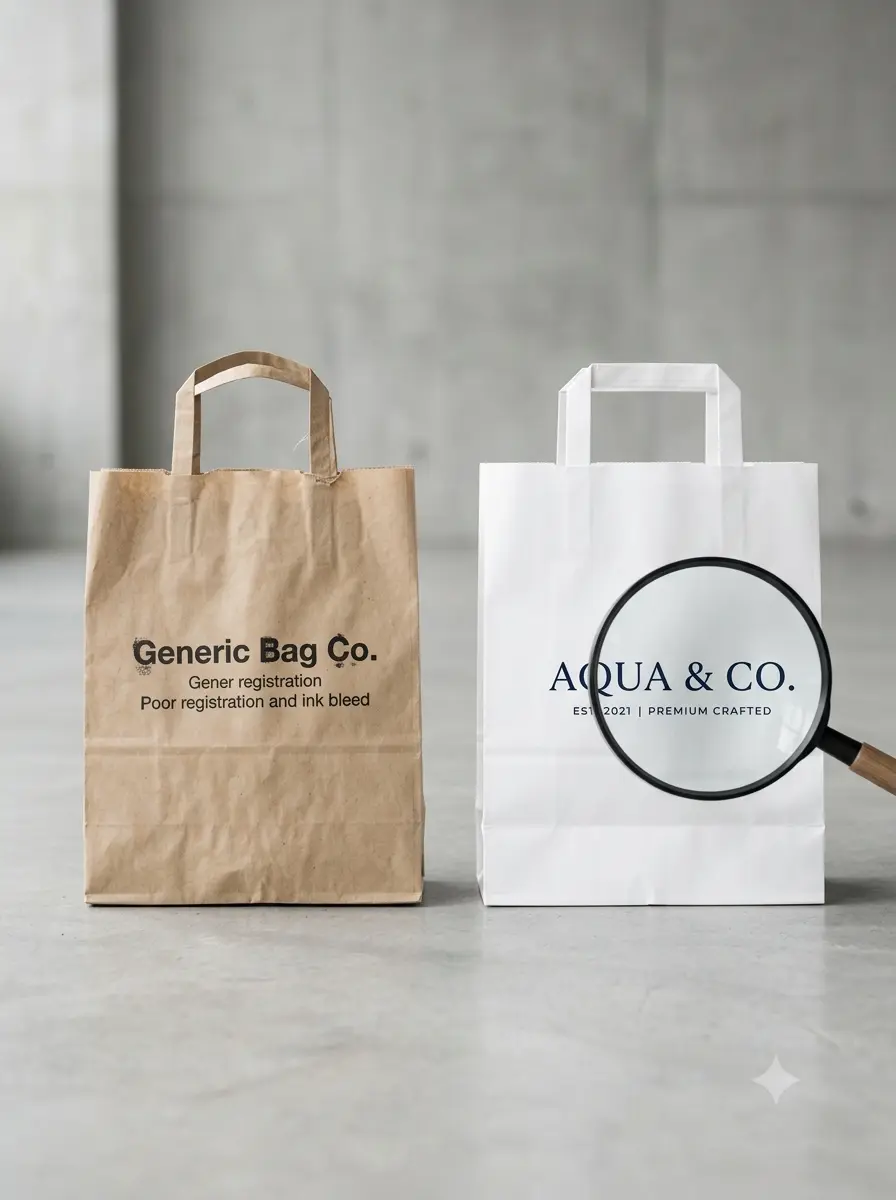
What customization options are genuinely feasible at bulk scale?
Customization is critical for brand identity, but not all options are created equal when you’re talking about millions of units. We work with brands to identify customization that’s impactful and scalable. This includes precise color matching for your brand palette, high-quality printing (flexographic or lithographic, depending on complexity and volume), and a range of sizes to suit different product lines. We also discuss handle reinforcement options, such as additional paper layers, for heavier items, ensuring durability without compromising recyclability. The goal is to achieve distinctive branding while maintaining manufacturing efficiency and cost-effectiveness. Sometimes, a subtle deboss or a clever structural design can make more of an impact than an expensive, multi-color print job that’s difficult to reproduce consistently at scale.
Explore Flat Handle Bags
Frequently asked questions
What’s the typical lead time for a large bulk order of flat handle paper bags?
Lead times vary significantly based on order volume, customization, and origin. For overseas bulk orders, expect anywhere from 12 to 16 weeks, including production and shipping. Local or regional suppliers might offer shorter turnarounds, sometimes 4-8 weeks, though their unit costs can be different.
How can I verify a supplier’s sustainability claims for their paper bags?
Insist on third-party certifications like FSC (Forest Stewardship Council) for paper sourcing and GRS (Global Recycled Standard) for recycled content. Also, request a detailed breakdown of materials, inks, and adhesives used, along with any environmental impact assessments or factory audit reports.
Are flat handle paper bags strong enough for heavier items?
The strength of flat handle paper bags depends on the paper’s GSM (grams per square meter) and any handle reinforcement. For heavier items, look for bags with higher GSM paper (e.g., 120-150 GSM) and consider options with additional paper layers or stronger adhesive points for the handles. Always test samples with your actual products.
What customization options are available for bulk flat handle paper bag orders?
Common customizations include bespoke sizing, brand-specific color matching, high-quality printing (flexo or litho), different paper finishes (e.g., smooth kraft, ribbed), and handle reinforcement for durability. Unique structural designs or embossing can also be explored for larger volumes.
How do I manage international shipping and customs for large packaging orders?
Work with a supplier experienced in global logistics or engage a freight forwarder. They can advise on Incoterms, customs duties, import taxes, and necessary documentation. Factor in potential delays at ports and ensure your supplier provides clear tracking and communication throughout the shipping process.